

Effective athletic recovery requires more than just cold water; it demands precise thermal management and structural integrity to facilitate consistent physiological benefits. The best cold plunge tub options in the professional market transition away from makeshift ice baths toward integrated chilling systems that maintain exact temperature thresholds. Athletes and wellness centers increasingly prioritize reliability and cooling efficiency to ensure that recovery protocols remain repeatable and effective across multiple sessions.
Achieving temperatures as low as 3°C provides the system with sufficient thermal overhead to reliably maintain clinically recommended recovery temperatures (typically 10–15°C) even under high-demand, back-to-back usage. Modern chilling units, specifically those utilizing high-performance 1HP compressors, provide the necessary cooling capacity to offset ambient heat and body temperature increases. This steady thermal state is critical because cold shock proteins and anti-inflammatory responses rely on a sustained, deep cooling of the muscle tissue rather than a brief dip.
Durability in a high-moisture environment necessitates the use of non-porous materials like US Aristech Acrylic, which resists bacterial growth and chemical degradation. Supporting this shell with a high-density PU foam layer ensures that the cooling system does not work overtime to combat environmental heat transfer. Without adequate insulation, a chiller’s energy consumption spikes, and the water temperature can fluctuate, undermining the consistency required for professional-grade muscle recovery therapy.
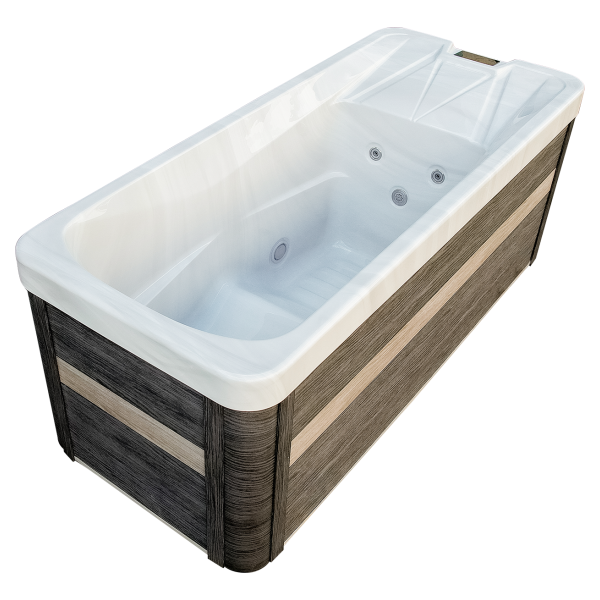
A robust aluminum frame provides the necessary rigidity to support the weight of both the water and the user without structural flexing or fatigue. Unlike plastic or inflatable alternatives, a metal-reinforced chassis ensures that internal plumbing and electrical components remain secure during years of daily operation. This stability is particularly vital in commercial settings where the unit undergoes constant loading and unloading cycles by athletes of various sizes and weights.
| Technical Specification | Professional Standard (I-01) |
|---|---|
| Chiller Power | 1HP LHP High-Efficiency |
| Temperature Range | Down to 3°C |
| Shell Material | US Aristech Acrylic |
| Frame Structure | Reinforced Aluminium |
| Insulation | High-density PU Foam |
Incorporating targeted massage jets into a cold environment adds a layer of mechanical therapy to the physiological effects of cryotherapy. These jets help move the water to prevent the formation of a thermal layer around the skin, which can otherwise insulate the body from the cold. By forcing the cold water against the skin, the system ensures a “breaking” of the thermal boundary, maximizing the efficiency of the heat exchange process.
Professional facilities must consider the operational costs of maintaining cold water, making energy efficiency a core metric for any long-term investment. Choosing a system with integrated filtration and UV sterilization reduces the need for frequent water changes, which saves on both water costs and the energy required to re-cool. This streamlined maintenance cycle allows staff to focus on athlete performance rather than the logistics of water chemistry and manual ice handling.
Why is 3°C considered the optimal minimum temperature?
While many users start at 10°C, a 3°C capability ensures that the system has enough overhead to handle back-to-back sessions without the temperature rising above effective levels.
Does the acrylic shell require special chemicals for maintenance?
High-quality acrylic is non-porous, meaning it requires minimal sanitization; standard spa-grade UV filters and occasional surface wipes are usually sufficient for hygiene.
How does the aluminum frame compare to stainless steel?
Aluminum offers a superior strength-to-weight ratio and natural corrosion resistance, making it ideal for the humid conditions typical of indoor and outdoor recovery zones.
Investing in the best cold plunge tub technology translates directly into more consistent recovery windows for high-performance individuals and commercial spa clients. Guangzhou Huantong Industrial Co., Ltd. has refined these engineering standards over decades, ensuring that the structural and thermal components of their Lovia line meet rigorous demands. Ultimately, a recovery system is only as valuable as its ability to provide a predictable, safe, and deeply cooling environment whenever it is required.