

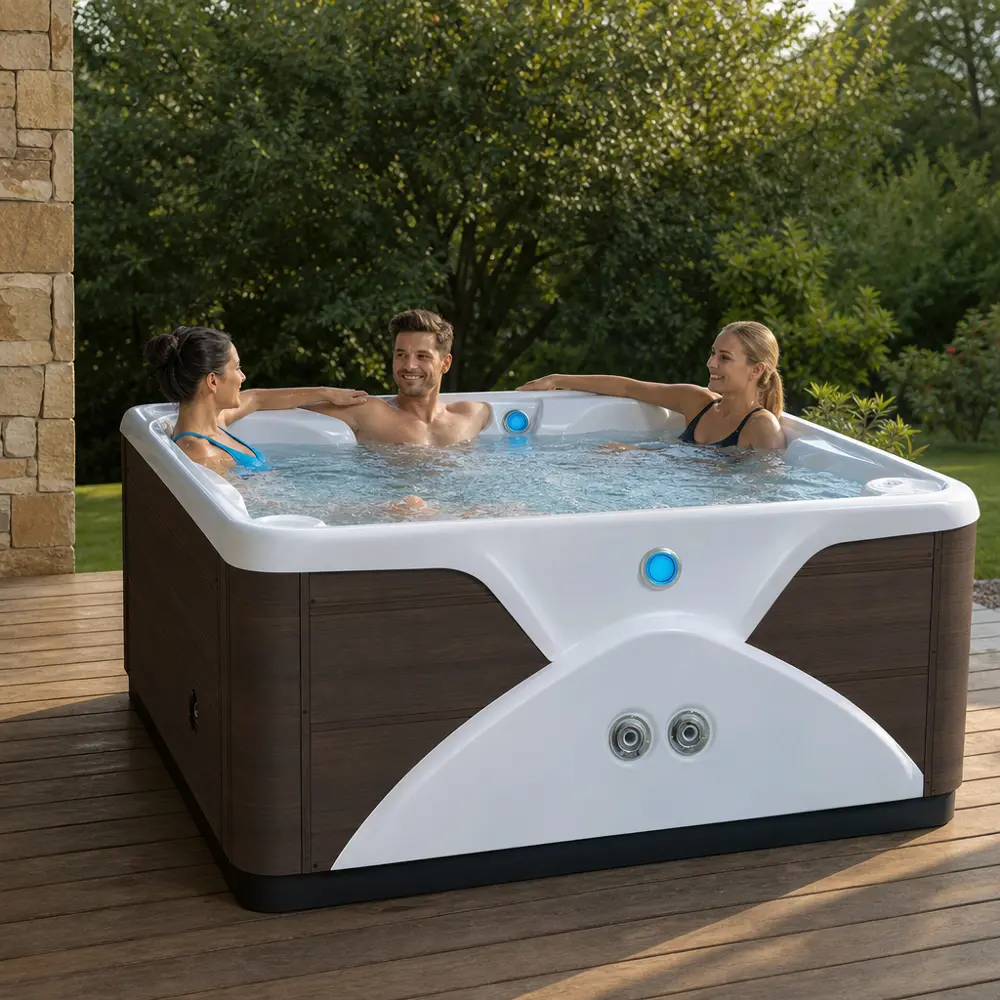
An outdoor rectangular hot tub transforms how you spend leisure time at home. Unlike traditional round designs, a rectangular layout maximizes seating efficiency while fitting naturally into modern deck and patio layouts. Whether you’re considering a compact three-person model or exploring larger configurations, understanding the key factors that define a quality outdoor rectangular hot tub helps you make an informed investment.
The appeal of an outdoor rectangular hot tub lies in its practical geometry. A rectangular footprint works with existing deck dimensions, aligns with architectural lines, and creates a visual anchor that complements contemporary outdoor spaces. This shape also influences internal layout—allowing manufacturers to position seats and lounges strategically for ergonomic support and therapeutic benefit.
Rectangular hot tubs adapt to space constraints that round models cannot address. A balcony, side courtyard, or narrow terrace becomes usable when you choose a rectangular format. The straight edges also simplify deck integration and reduce wasted corner space that circular tubs naturally create.
Beyond spatial efficiency, the rectangular profile appeals to those seeking a modern aesthetic. The clean lines and structured form suggest intentional design rather than decorative excess. This matters if your outdoor area reflects minimalist principles or contemporary architecture.
Capacity scales differently across rectangular designs. A three-person outdoor rectangular hot tub offers intimate relaxation without demanding extensive footprint—typically around 7 feet long and 5 feet wide. This size sits comfortably on elevated decks and provides meaningful hydrotherapy for couples or small families without the maintenance burden of larger installations.
The ergonomic layout separates a well-designed outdoor rectangular hot tub from generic alternatives. Strategic seat positioning addresses how your body naturally settles into warm water. A thoughtfully engineered three-person model typically features one full-length lounge position and two complementary seats, each contoured to support the spine’s natural curve.
The lounge position cradles your entire body, allowing your neck and shoulders to rest against molded supports. The flanking seats accommodate upright posture while still providing back and shoulder support. This arrangement lets three people occupy the same tub without compromising anyone’s comfort—a significant advantage over designs where seating feels cramped or asymmetrical.
Jet placement amplifies the comfort equation. Rather than distributing jets randomly, manufacturers strategizing an outdoor rectangular hot tub position jets to target specific muscle groups. Neck jets address tension from screen time, shoulder jets target postural strain, lower back jets support the lumbar region, and leg jets reach calves and thighs. Strategic jet alignment transforms a hot tub from simple bathing into functional hydrotherapy.
Not all massage systems deliver equivalent benefit. An outdoor rectangular hot tub with 27 strategically positioned jets provides more thorough hydrotherapy than models with half that number. However, raw jet count matters less than thoughtful distribution across body zones.
The relationship between pump power and jet configuration determines massage intensity. A 3-horsepower jet pump paired with 27 jets creates noticeable pressure variation—some jets deliver vigorous massage while others provide gentler circulation. This variation lets users find their preferred intensity without requiring separate pump settings.
Jet variety also matters. Directional jets can be aimed precisely, while fixed jets create consistent massage patterns. Some jets target specific muscles while others improve general circulation. A well-designed outdoor rectangular hot tub balances these approaches rather than relying on uniform jet design.
Managing water temperature and jet functions requires reliable electronics. Balboa is a manufacturer of spa control systems widely used across the hot tub industry. This matters because their widespread adoption ensures parts availability and service simplicity if issues arise.
A 3-kilowatt heater suits smaller rectangular hot tubs, maintaining target temperature efficiently without excessive energy consumption. The heater’s power level should match your climate zone and usage frequency. In moderate climates, a 3kW system keeps water at 100–104°F even when ambient temperature drops to 40–50°F. Colder regions or frequent outdoor use may benefit from higher wattage.
The control interface should feel intuitive—buttons that respond promptly, displays that show current temperature without confusion, and preset functions that recall your preferred settings. Poor control design frustrates regular use, while responsive interfaces encourage consistent enjoyment.
Keeping an outdoor rectangular hot tub clean requires two parallel systems: mechanical filtration and chemical or UV sanitation. A 50-square-foot filter handles solid debris—leaves, skin cells, algae spores—preventing cloudiness and reducing the chemical load your sanitizer must manage.
UV sterilizers provide supplementary sanitation by neutralizing microorganisms as water circulates. While UV doesn’t replace chemical maintenance entirely, it reduces chlorine or salt demands, which benefits both water clarity and skin comfort. The circulation pump—typically 0.35 horsepower in compact models—moves water through the filter and UV system continuously during operation.
The filtration cycle runs independently from jet operation. You can turn off jets while maintaining circulation and sanitation, an energy-efficient approach for overnight or extended idle periods. This separation between recreational jets and maintenance circulation reduces operational cost.
Shell composition determines lifespan and maintenance requirements. Acrylic shells resist fading, cracking, and surface degradation. Quality acrylic (typically 3mm or thicker for hot tubs) impacts impact resistance and insulation.
The support frame deserves equal attention. An aluminum frame with dimensions like 40mm × 20mm provides structural rigidity while resisting corrosion. Aluminum won’t rust like steel and withstands poolside chemical exposure indefinitely. Proper frame engineering prevents wobbling, creaking, or structural failure as the tub cycles through freeze-thaw seasons.
Insulation thickness—around 2 centimeters in well-engineered models—dramatically affects operating cost. Thicker insulation reduces heat loss, meaning your heater runs less frequently and consumes less electricity. Over a five-year ownership period, superior insulation pays for itself through energy savings.
The external cabinet material matters for aesthetics and weather resistance. Polystyrene skirts offer durability and quick-dry properties compared to traditional wood-look options. Maintenance becomes simpler when materials resist water absorption and decay.
A three-person outdoor rectangular hot tub measures approximately 2100mm (6.9 feet) long and 1580mm (5.2 feet) wide—compact enough for apartment balconies yet spacious enough for genuine relaxation. The 780mm (2.6-foot) depth provides sufficient water volume for buoyancy while fitting standard deck heights.
Weight distribution matters during installation. A dry weight of 280 kilograms (617 pounds) becomes manageable, but the filled weight—approximately 1600 kilograms (3,527 pounds)—demands structural support. A reinforced deck or ground-level placement prevents damage to underlying surfaces.
These dimensions allow placement in locations larger circular tubs cannot access. A corner terrace, side yard, or even a spacious balcony becomes viable. The rectangular profile also integrates visually with composite or wood deck lines rather than disrupting them.
Power supply flexibility—available in 220V, 380V, or 110V configurations—accommodates different regional standards and existing electrical infrastructure. Selecting the correct voltage for your location ensures safe operation and optimal performance.
A professional electrician should handle final installation, running dedicated circuits with appropriate amperage and breaker protection. Improper electrical setup creates safety hazards and may void warranty protection. Some regions require licensed electrician certification for hot tub connections.
Ground fault circuit interrupter (GFCI) protection is essential. Confirming this protection exists before operation adds an important safety layer.
An outdoor rectangular hot tub requires consistent but manageable maintenance. Water testing twice weekly ensures proper chemical balance—pH, alkalinity, and sanitizer levels all affect comfort and equipment longevity. Most quality systems come with straightforward testing kits and dosing guides.
The filter requires cleaning every two weeks under normal use, with complete replacement annually or as needed. UV sterilizers typically need lamp replacement every 12 months. These consumables cost modestly compared to skipping maintenance, which accelerates deterioration.
Quarterly deep cleaning of the circulation system using specialized cleaners prevents biofilm accumulation in pipes and reservoirs. This step takes minimal time but significantly extends equipment lifespan and maintains water quality without escalating chemical usage.
During winter months in freezing climates, winterization protocols prevent freeze damage. Draining the system or using specific antifreeze preparations depends on whether you plan to keep the tub in operation during cold months.
When evaluating different outdoor rectangular hot tub options, create a comparison matrix addressing key variables:
| Feature | Compact 3-Person | Mid-Size 5-Person | Larger 6+ Person |
|---|---|---|---|
| Footprint | ~7′ × 5′ | ~8′ × 6′ | 9’+ × 6.5’+ |
| Seating | 1 Lounge + 2 Seats | 2 Lounges + 3 Seats | Multiple lounges + seats |
| Jet Count | 20–30 | 40–60 | 60+ |
| Heater Power | 3–4 kW | 5–6 kW | 7–10 kW |
| Decking Demand | Moderate | Significant | Substantial |
| Chemical Maintenance | Minimal | Moderate | Moderate–High |
Smaller models work for couples, individuals seeking personal wellness, and space-constrained properties. Mid-size configurations appeal to families and those hosting occasional gatherings. Larger systems suit properties with spacious decking and groups requiring simultaneous seating.
An outdoor rectangular hot tub installed in a residential courtyard creates an intimate gathering space year-round. The compact footprint allows placement amid landscaping without dominating the visual landscape. Evening use, paired with subtle lighting, transforms the outdoor area into a retreat distinct from everyday living spaces.
On apartment terraces, a three-person model becomes feasible without structural concerns that larger units raise. The rectangular form fits naturally with railing profiles and existing deck configurations, appearing intentionally integrated rather than retrofitted.
Post-workout recovery applications appeal to fitness-focused users. Alternating between hot tub hydrotherapy and stretching routines accelerates muscle recovery and reduces soreness—a practical benefit beyond pure relaxation.
Couples seeking private spa experiences find the intimate capacity of a rectangular three-person model perfect for regular use without the complications that larger systems introduce. The maintenance remains straightforward, energy costs stay reasonable, and the cozy dimensions encourage consistent usage.
Choosing an outdoor rectangular hot tub ultimately depends on balancing space availability, intended use frequency, budget considerations, and aesthetic preferences. A rectangular form offers practical advantages over circular alternatives when deck configuration, visual integration, or spatial efficiency matters.
Quality construction—premium acrylic, robust aluminum framing, reliable control systems—ensures that your investment delivers consistent performance across years of use. The difference between budget models and well-engineered systems becomes apparent within the first season, when durability and hydrotherapy effectiveness prove their value.
An outdoor rectangular hot tub represents more than a purchase; it’s a commitment to regular wellness practice and outdoor living enhancement. Selecting one built with attention to ergonomic design, reliable components, and thoughtful engineering ensures that commitment translates into genuine daily benefit and lasting satisfaction with your outdoor space.