

When it comes to creating the perfect outdoor leisure space, swim spas and hot tubs are the two most popular choices among homeowners. Both can bring relaxation, comfort, and lifestyle benefits, but their uses are completely different.
Understanding their unique advantages can help you choose the one that best suits your space, health goals, and family needs. The following is a detailed comparison to help you determine which one truly suits your lifestyle.
The main design purpose of a hot tub is to relax the body and mind, relieve stress, and enjoy spa treatments. A hot tub is equipped with ergonomic seats and multiple massage nozzles, which help relieve muscle tension, promote blood circulation, and provide a soothing place to rest after a long day. It is an ideal choice for those who want to relax with friends or family in a warm social environment.
On the other hand, a swim spa offers a dual-purpose experience. It offers ample space for you to swim in place with the powerful water flow system, allowing you to enjoy full-body workouts without the need for a large swimming pool. Meanwhile, many swim spas are also equipped with heated soaking areas and spa nozzles, allowing you to enjoy the benefits of a hot tub as well. Therefore, the swim spa is an ideal choice for fitness enthusiasts or families who wish to have both exercise and relaxation functions in one facility.
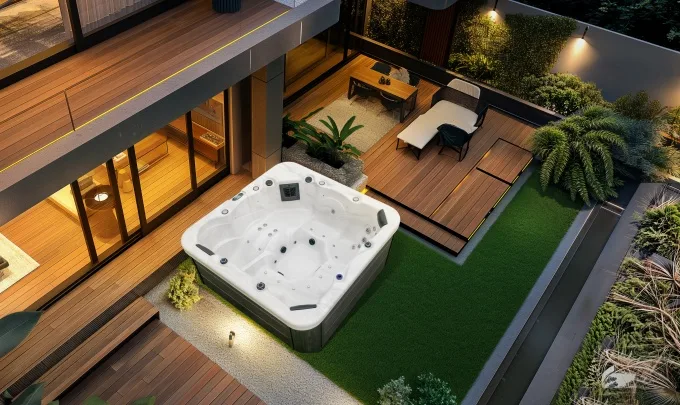
Hot tubs are usually more compact and easier to install. They only take up a very small amount of backyard space and can be installed on terraces, platforms, or reinforced concrete bases. Hot tubs are easy to install and are an excellent choice for small backyards or urban environments.
In contrast, the volume of swim spas is much larger. They require more space and may need additional site preparation work. However, compared with standard-sized swimming pools, they still take up less space and thus are a space-saving way of water-based fitness. For homeowners with a moderate outdoor space and a desire for multi-functional use, a swim spa is the perfect choice.
If you are seeking deep relaxation and muscle recovery, then a hot tub is the ideal choice. Its massage nozzles can massage key areas such as the back, shoulders, and legs, making it very suitable for people who need to relieve stress, joint discomfort or daily fatigue.
A swim spa further enhances health benefits by adding low-impact exercises. Swimming, resistance walking, water jogging, and water aerobics are all excellent ways to improve cardiovascular health, enhance strength, and maintain flexibility. Swim spas are especially suitable for the elderly, athletes, and those recovering from injuries because water can relieve joint pressure.
Both hot tubs and swim spas require regular maintenance, including water balance, filtration, and regular cleaning. Hot tubs usually have lower operating costs due to their smaller volume and water volume.
Although swimming spa pools have slightly higher operating costs, they are usually equipped with advanced insulation and energy-saving systems, which help control operating costs.

If you are looking for a place to relax both your body and mind, whether it’s taking a soak at night, having a social gathering, or enjoying a moment of peace, a hot tub is the ideal choice. It is compact in size, less expensive and features luxurious massage functions, making it highly attractive to homeowners who value relaxation.
Swim spas are suitable for those who pursue both health and leisure. If you enjoy swimming, water sports, or active family entertainment activities, then a swimming pool spa will offer you more options. It integrates year-round fitness and leisure entertainment.
Ultimately, the choice between a swim spa and a hot tub depends on your lifestyle and priorities. If your main goal is to relax both body and mind, a hot tub will be your perfect choice. If you are in pursuit of the perfect combination of fitness, physiotherapy, and entertainment, then a swimming spa pool will offer you unparalleled versatility. In the debate of swim spa vs hot tub, understanding your personal needs is the key to making the right decision.