

Při navrhování venkovního wellness centra se vždycky objevuje klíčová otázka: jak hluboká je vířivka a jak toto vertikální měření ovlivňuje realitu vašeho každodenního vodního tréninku? Je to parametr, který mnoho kupujících přehlíží a zaměřuje se místo toho na délku skořepiny nebo počet trysek. Hloubka však proměňuje plavidlo z mělkého bazénu na náročné cvičiště s nízkým dopadem. Hloubka ovlivňuje dynamiku tekutin, vztlak a tepelné vlastnosti vody za extrémního počasí. Pochopení těchto rozměrů zaručuje, že vaše investice dokonale odpovídá fyzice vašeho těla.
Vejděte do jakéhokoli profesionálního showroomu s hydroterapií nebo komerčního wellness centra a všimnete si, že hloubka vířivky se řídí přesně vypočítanou a standardizovanou architekturou. Absolutní hloubka fyzické akrylátové skořepiny se obvykle pohybuje mezi 48 a 60 cm. Tato vnější výška se přímo promítá do vnitřní hladiny vody, která je kvůli požadavkům na hladinu stěrky o několik centimetrů níže.
Většina prémiových vířivek na trhu se úhledně dělí do dvou hlavních hloubkových kategorií, určených pro specifické fyzické aktivity.
| Hloubka skořepiny (palce) | Průměrná hloubka vody | Primární cílený případ použití |
|---|---|---|
| 48 "na 50" | 42 "na 44" | Tradiční aquaaerobic, jogging po hrudník, neformální brodění s rodinou a standardní hydrodynamický odporový trénink. |
| 54 "na 60" | 48 "na 54" | Skutečné kontinuální plavání volným stylem, běh v hluboké vodě, pokročilá atletická kondice a biomechanika vysokých plavců. |
Pro nás vyžaduje konstrukce těchto rozměrů vyvážení strukturální integrity skořepiny s pohodlím uživatele. Každý další centimetr vertikální hloubky zvyšuje masivní hydrostatický tlak na akrylátové stěny. To vyžaduje přesné techniky vyztužování sklolaminátem, aby se zabránilo prohýbání skořepiny pod zatížením po desetiletí neustálého používání.
Mezi hloubkou vody a skutečně využitelným prostorem k plavání uvnitř bazénu je hluboký, neintuitivní rozdíl. V tradičním zahradním bazénu se dno postupně svažuje, což vám umožňuje najít ideální místo. V vířivce musí dno zůstat rovné, stabilní a dokonale vodorovné, aby se zabránilo nebezpečným turbulencím, které by narušily váš plavecký proud.
Hloubka vody určuje přirozený bod otáčení vašeho těla během volného stylu. Pokud je hladina vody příliš nízká, klouby vysokého plavce se během fází chytání a tahání často dotýkají dna. Navíc, pokud nedokážete udržet silný a objemný odraz, vaše boky přirozeně klesnou. Hluboká voda funguje jako hydraulický polštář, zvedá vaše střed těla a umožňuje silnému proudu plynule plynout pod vaším tělem. Tím se minimalizuje omezující vlna odrážející se od podlahy a simuluje se zážitek z otevřené vody v kompaktním provedení.
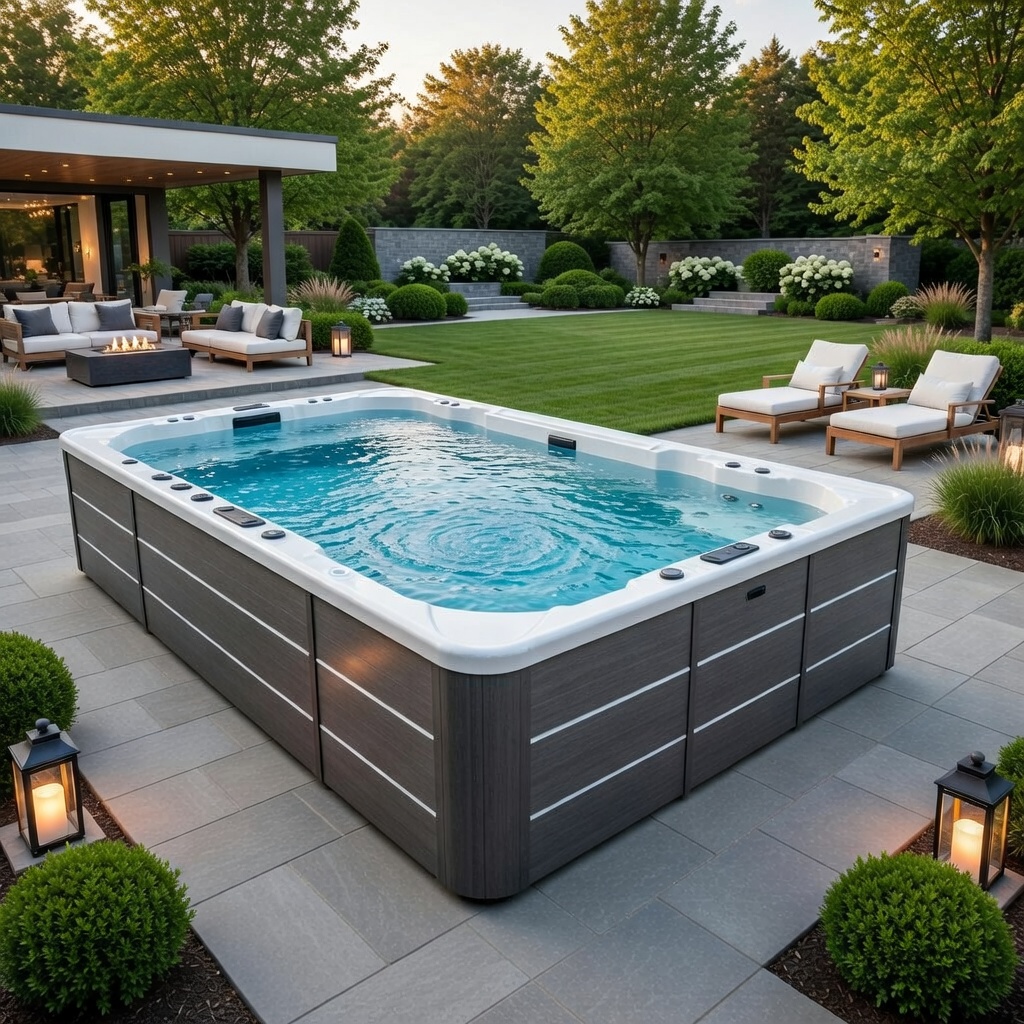
Výběr ideálního bazénu vyžaduje poctivý přehled o tom, kdo bude vodu používat, jak jsou vysocí a jaké jsou jejich dlouhodobé fitness cíle. Rodina, která se zaměřuje na výuku malých dětí plavat, bude shledávat hluboký 152cm bazén zastrašujícím a nepraktickým pro hru ve stoje. Naopak, vysokoškolský triatlonista s výškou přes 180 cm se bude cítit beznadějně stísněně v mělkém 122cm fitness bazénu.
Před konečným rozhodnutím zvažte tyto specifické faktory prostředí a fyzikální faktory:
Nalezení výrobce, který chápe tuto rovnováhu, je vzácné. Pro nás je každá křivka, obrys sedadla a hluboká plavecká dráha navržena tak, aby maximalizovala objem vody, aniž by obětovala prostorově efektivní venkovní luxus. Tiše se zaměřujeme na vytváření konstrukčně nejspolehlivějších plavidel s přesnými hloubkovými proporcemi, přizpůsobených speciálně vašim životním potřebám.
Když se před koupí ptáte, jak hluboká je vířivka, ve skutečnosti se ptáte, jak volně chcete, aby se vaše tělo mohlo pohybovat. Udělejte si čas a vkročte do suchého modelu, změřte si obvod trupu a vyberte si hloubku, která skutečně rozproudí váš vodní rituál.
SPOLEČNOST