

One of the primary decisions homeowners face when installing a hot tub at home is whether to choose an above-ground or an in-ground type. These two types of hot tubs each have their unique advantages and disadvantages. The choice of which one mainly depends on factors such as budget, space, aesthetics, and long-term maintenance. Understanding the differences between them can help homeowners make decisions that fit their lifestyle and backyard layout.
Above-ground hot tubs are not built into the ground; instead, they are placed on the ground or on the surface of terraces and decks. They are usually made of materials such as acrylic, fiberglass or synthetic wood, and come in various shapes, sizes and functions to choose from. One of the greatest advantages of an above-ground hot tub is its affordable price. Compared with underground hot tubs, the purchase and installation costs of above-ground hot tubs are usually lower.
Another key advantage is portability. Although portability is relative, above-ground hot tubs can be easily moved or replaced without large-scale construction, which is ideal for renters or homeowners who may move in the future. They usually also require less structural preparation, and thus are suitable for various types of floors. Modern above-ground hot tubs are equipped with powerful hydraulic nozzles, LED lighting and built-in seats, providing a luxurious experience without the need for permanent installation.
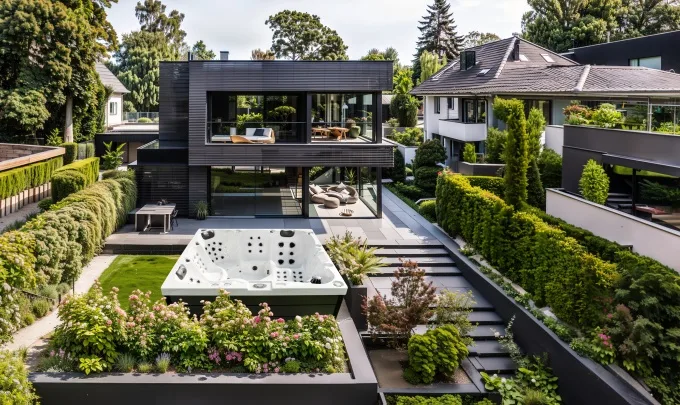
Unlike above-ground hot tubs, in-ground hot tubs are built into the landscape and level with the surrounding terraces or gardens. They have a smooth and exquisite appearance and usually blend naturally with the design of the backyard. Due to their integrated design, in-ground hot tubs offer a high degree of customization in shape, size and material, enabling homeowners to create truly unique functions in outdoor spaces. Compared with above-ground hot tubs, they are usually more durable and have a longer service life because they are less affected by natural factors such as wind or ultraviolet rays.
However, in-ground hot tubs are more expensive and their installation is more complicated. Usually, they project requires excavation, pipeline laying and professional installation, which will greatly increase the total investment. In addition, since underground jacuzzis are permanent, it is much more difficult to move or upgrade them. Maintenance work may also be more complex, as cleaning the edges and ensuring smooth drainage requires careful planning during the installation process.
From a practical perspective, above-ground hot tubs are highly suitable for those who seek flexibility, quick installation and lower initial costs. If you plan to move or redesign your backyard layout in the future, the above-ground hot tub can also be moved or relocated relatively easily. This is a great plus for many homeowners.
In-ground hot tubs are more suitable for homeowners who seek long-term, integrated designs and wish to enhance the aesthetic appeal of outdoor spaces. They offer a sense of luxury and permanence. If installed properly, they can not only enhance the daily user experience but may also increase the overall appeal and value of the property.
Ultimately, whether to choose an above-ground or in-ground hot tub mainly depends on what your top priority is. If budget, ease of installation, and flexibility are your top concerns, then an above-ground hot tub might be a better choice. If a beautiful, customized and perfectly integrated design with the backyard is of vital importance, then investing in an embedded hot tub may be worth the extra cost and effort. No matter which one you choose, they can all offer a relaxing and stress-relieving spa experience.